

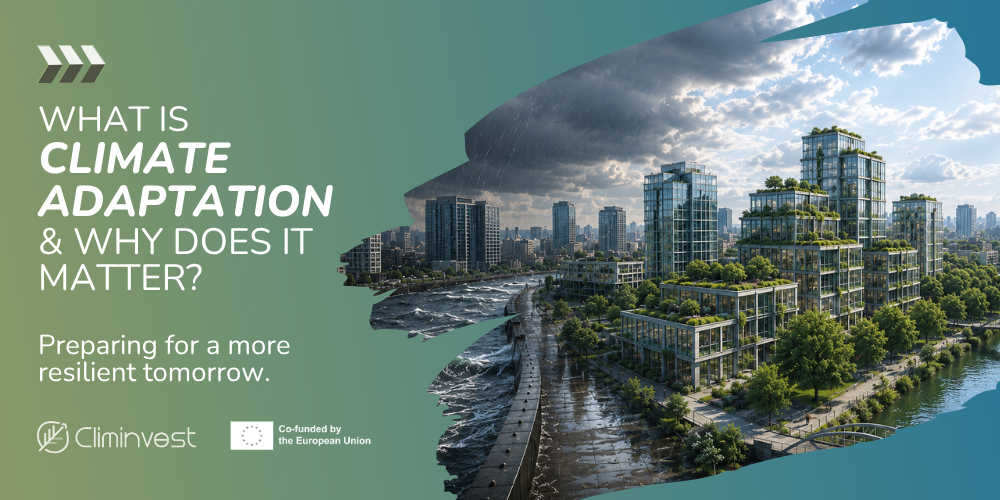
Climate change is no longer a distant possibility. Rising temperatures, changing rainfall patterns, droughts, flooding and more frequent extreme weather events are already affecting communities, businesses and infrastructure across Europe and beyond. As these impacts become increasingly difficult to ignore, the conversation around climate action is expanding beyond how we can reduce emissions to another equally important question: how can we prepare for the changes that are already happening?
This is where climate adaptation comes in.
While climate mitigation focuses on addressing the causes of climate change, adaptation focuses on managing its consequences. It is about making our buildings, infrastructure, economies, communities and natural environments better able to cope with current and future climate risks .But adaptation is not simply about reacting when something goes wrong. Increasingly, it is about anticipating future risks and making better decisions today.
What is climate adaptation?
Climate adaptation means taking action to prepare for and respond to the effects of climate change. It can include improving water management, adapting buildings to extreme heat, strengthening infrastructure or changing how cities plan for future climate risks. The aim is to reduce vulnerability and build climate resilience, the ability of communities, infrastructure and economies to withstand and recover from climate-related impacts.
For example, a city experiencing more frequent heatwaves might invest in better building design, green spaces and cooling measures. A region facing water shortages could improve water efficiency, storage and reuse. In both cases, adaptation means anticipating risks rather than simply responding after damage occurs.
Why does climate adaptation matter?
Cities and regions face increasingly complex climate risks, while essential infrastructure needs to remain reliable for decades. However, adapting to climate change is not only a technical challenge. It is also a financial challenge.
A solution may clearly reduce climate risks, but decision-makers and investors still need to understand its costs, benefits, risks and long-term value. Some adaptation projects generate direct financial returns, while others create value by preventing future losses, improving resource efficiency or delivering wider social and environmental benefits.
This can make climate adaptation projects more difficult to assess and finance.
Making adaptation solutions easier to finance
As the need for climate adaptation grows, so does the need to connect climate knowledge with investment.
This is where CLIMINVEST comes in.
CLIMINVEST is working to improve the bankability of climate adaptation solutions by bringing financial viability, climate risk, ESG considerations and investment potential into the development process. One of the project’s key concepts is Bankability by Design — considering financial requirements from the beginning rather than only when a project is ready to seek funding.
The project is also developing tools and resources to help stakeholders identify, assess and replicate promising climate adaptation solutions.
Building a more resilient future
Climate adaptation is ultimately about making better decisions today to reduce vulnerability tomorrow. Whether it is improving water systems, adapting buildings, strengthening infrastructure or developing more resilient energy solutions, successful adaptation requires collaboration between cities, businesses, investors, researchers and policymakers.
The challenge is no longer simply whether we need to adapt to climate change. It is how we can make effective adaptation solutions easier to understand, finance and implement at scale.
That is the challenge CLIMINVEST is working to address.